

Wolf Dream Meaning: 25+ Insights into Your Hidden Instincts

Ever wake up feeling like you were running through a moonlit forest, heart hammering, but strangely... alive? Dreaming of wolves is rarely a neutral experience. It’s visceral, and it usually leaves a lingering scent of the 'wild' in your morning. Whether you were being hunted or leading a silent pack, your subconscious is tapping into an ancient language of instinct and social hierarchy. Let’s peel back the fur and see what’s really howling inside you.
The interpretations provided are for informational purposes only and do not constitute medical or psychological advice. For persistent concerns, please consult a licensed mental health professional.
Wolf Dream Meaning: The Core Interpretation
Wolves represent social hierarchy, survival instincts, and personal freedom. Like dreams of bears, wolf encounters often signal the need to reclaim your personal power. Identify if the wolf felt like a threat (external pressure) or a companion (internal power).
This may reflect external pressures—demanding employers, draining relationships, or ambitions you fear acknowledging. Similar to being chased in dreams, the wolf possibly represents aspects of your shadow self that consciousness has rejected.
You might be experiencing a return of repressed vitality. This could indicate successful integration of instinctual wisdom or the emergence of necessary boundaries in waking life.
This may suggest observation of social dynamics without personal investment, or a messenger role indicating that important information is trying to reach your conscious awareness.
8 Common Wolf Dream Scenarios and Their Meanings
The specific context and emotional tone of wolf encounters significantly influence interpretation. Below are frequent scenarios reported across various demographic groups.
Often suggests avoidance of acknowledged anger, sexual instincts, or aggressive impulses. Much like dreams of running, this indicates something in waking life you are trying to escape. The shadow self may be demanding integration rather than extinction.
Unexpressed communication demanding release. The howl is the sound of what cannot be spoken in daylight.
Integration of shadow aspects complete enough to become allies. The feared has become the familiar.
Recurring solitary wolf imagery frequently emerges during decisions that defy social timelines—career pivots, creative isolation, or autonomy in relationships. This mirrors the themes found in flying dreams, where personal freedom and escape from constraints take center stage.
Drawing from Norse tradition where Odin's wolves stare daily at the god, this often indicates confrontation with truths you are avoiding. The wolf sees what you refuse to see.
Parental leadership versus dominance. Such dreams may appear when questioning whether your authority relies on nurturing guidance or authoritarian control.
Identity transition from domesticated self to sovereign instinct. Often appears during major life pivots where old social skins must be shed.
Possibly reflects creative blockages or hesitation about grasping opportunities. The hand symbolizes agency and manipulation of the world; injury here may suggest fear of taking action. This connects to dreams of teeth falling out, where personal power and capability feel compromised.
View More Rare Scenarios
Boundaries between public and private self dissolving. Instinct has invaded your most private psychological space.
Nurturing your own wildness or aggression. May suggest conscious integration of previously feared instincts.
End of a cycle involving instinct or aggression. Could indicate successful integration or dangerous suppression of necessary wildness.
New projects or relationship styles requiring fierce protection. Similar to pregnancy dreams, this represents vulnerable beginnings that will grow dangerous if neglected.
The Psychological Shadow: Jung, Freud, and the Wild Self
The Shadow Self
Carl Jung's framework suggests that the wolf frequently represents the "Shadow Self"—those disowned aspects of personality containing raw instincts, aggression, and primal wisdom that consciousness typically rejects. The wolf embodies the "Wild Man/Woman" archetype—the part of us that needs to howl but stays quiet at the office.
"The shadow is a moral problem that challenges the whole ego-personality, for no one can become conscious of the shadow without considerable moral effort."
— Carl Jung
When wolves appear in dreams, this often indicates the psyche's attempt to integrate these split-off fragments rather than continue suppressing them. This process parallels what occurs in snake dreams, where transformative energy demands acknowledgment. White wolves may represent the "Golden Shadow"—suppressed noble qualities—while black wolves typically carry the rejected aggressive or sexual impulses.
Freudian Perspectives
Sigmund Freud might interpret wolf imagery as repressed aggression or libidinal energy seeking expression. The wolf's predatory nature could symbolize instincts that civilized society demands we keep caged, yet which find release in the permissive theater of dreams.
From Fenrir to Romulus: Cultural Perspectives on Wolves
Compare the Biblical "Wolf in sheep's clothing" (deceit) with Native American traditions (the wolf as a teacher/pathfinder) and Norse mythology (chaos and power).
View More Cultural Interpretations
Why Wolves Appear to Leaders, Outcasts, and Caregivers
Different life circumstances and personality structures tend to attract specific wolf dream motifs. Understanding your current psychosocial context may help clarify the personal significance of these nocturnal encounters.
🎯 Managers/Leaders (Pack Dynamics)
Dreams of wolf packs may mirror organizational dynamics. Unlike popular "alpha" mythology, actual wolf packs function as family units led by parents rather than dominators. Such dreams might suggest questioning whether your leadership style relies on dominance or nurturing guidance.
🌙 Introverts (The Lone Wolf Identity)
Recurring solitary wolf imagery frequently emerges during decisions that defy social timelines—career pivots, creative isolation, or autonomy in relationships. This may represent necessary individuation rather than pathology, indicating your psyche is reclaiming sovereign territory.
🛡️ Parents (The Fierce "Mother Wolf" Protector Instinct)
The "Mother Wolf" archetype activation often manifests as fierce protective dreams. This ancient energy can transform boundary systems from passive accommodation to active defense of vulnerable dependents or creative projects requiring fierce protection.
🎨 Artists and Creators
Wolves may symbolize untamed creative impulses pressing against technical refinement or market expectations. Such dreams could indicate that your work requires more raw, unfiltered expression rather than polished technique.
Interpretation for Trauma Survivors
For individuals processing trauma, aggressive wolf encounters might represent the psyche's attempt to reprocess threat responses in controlled environments. Such dreams may correlate with post-traumatic growth periods, potentially marking neurological recalibration rather than regression. This pattern also appears in hospital dreams, where healing and vulnerability intersect.
Interpretation for Spiritual Seekers
White wolf imagery often correlates with periods of heightened intuition or spirit guide contact. Pay attention to synchronistic events within three days following such dreams—repeated numbers, animal encounters, or specific phrases from strangers may carry significance.
Spiritual Significance: The Wolf as Your Power Animal
In many shamanic traditions, wolf encounters suggest that your spiritual "pack" or soul family is attempting contact. The wolf teaches that loyalty must first be given to your own authenticity before it can be extended to others. If the wolf is calm, it may be a sign to trust your "gut" or "scent" regarding a current situation. This instinctual knowing parallels the guidance offered in tree dreams, where deep roots and natural wisdom provide stability.
Interactive: How to Decode Your Wolf Dream in 3 Steps
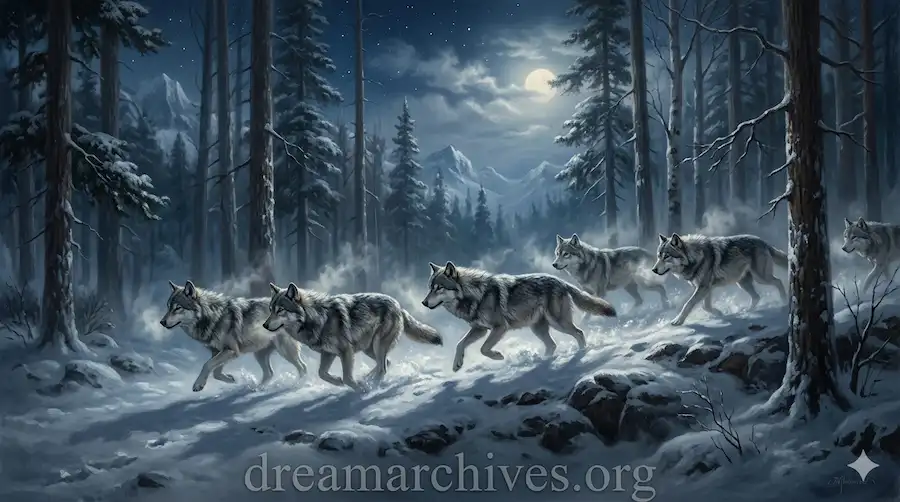
Ask: 1. Was the wolf alone? 2. Was it aggressive? 3. Did you feel fear or awe? This helps categorize your dream as "Social Stress" vs. "Personal Empowerment."
Yes (Lone Wolf) ➜ Personal Empowerment; sovereignty and independence themes
No (Pack) ➜ Social Stress; community dynamics and belonging issues
Yes ➜ External pressure or shadow confrontation
No ➜ Guidance or integration opportunity
Fear ➜ Resistance to necessary change or truth
Awe ➜ Spiritual awakening or power recognition
Beyond the Pack: The Biology of the "Alpha" Myth in Dreams
Deconstructing the "Alpha" Wolf Myth
The "Alpha" wolf concept is scientifically debated. Real wolf packs are family units led by parents, not dominators. Our dreams use this social construct to process office politics or family hierarchies, reflecting human projections onto animal behavior. This projection mechanism also operates in spider dreams, where cultural narratives about creativity and entrapment shape our nocturnal imagery.
Cross-cultural research indicates that individualistic cultures report higher frequencies of positive "companion wolf" dreams, while collectivist cultures more commonly report anxiety-based pack scenarios. This suggests that cultural memes significantly shape the expression of archetypal content.
Next Steps: How to Harness Your Inner Wolf Energy
Give 3-4 actionable tips: "Speak your truth" (the howl), "Audit your pack" (friend group), and "Reclaim your territory" (boundaries).
Find a private space and vocalize—howl if necessary. This physical release creates neurological shifts that verbal processing cannot achieve. Like the release sought in falling dreams, this act surrenders control to access deeper truth.
List your five most frequent contacts and identify energy exchanges. Is your pack protecting you or holding you back?
Practice declining one request weekly to experience wolf-like territorial integrity. Establish what is yours and defend it.
Begin weekly entries with "I allow myself to feel anger/desire/aggression..." to acknowledge denied emotions without judgment.
If wolf dreams recur with distressing intensity or accompany significant mood changes, consider consulting a licensed mental health professional specializing in dream work or Jungian analysis.
Wild Instincts: Deciphering the Meaning of Wolf Dreams
Is dreaming of a wolf a bad sign?
Not necessarily. While wolf dreams may evoke fear, they frequently appear during periods of personal growth or transition. Such dreams often indicate that your psyche is attempting to integrate suppressed instincts or address unresolved social dynamics rather than predicting actual danger.
What does a white wolf mean in a dream?
White wolf imagery commonly suggests spiritual guidance or the emergence of intuition. In many traditions, white wolves may represent power animals or higher self aspects attempting communication, often appearing during periods requiring trust in non-rational knowing.
Why do I dream about wolves during isolation?
Dreaming of wolves during isolation often reflects the 'Lone Wolf' archetype activation. This may indicate a necessary period of individualization and sovereignty rather than pathology, suggesting your psyche is renegotiating the balance between authentic selfhood and social belonging.
What does it mean if a wolf is staring at me in a dream?
A staring wolf often indicates confrontation with truths you might be avoiding in waking life. Drawing from Norse mythology where Odin's wolves engage in daily staring contests with the god, this motif suggests an invitation to acknowledge ignored instincts or repressed aspects of your shadow self.
What is the difference between lone wolf and pack dreams?
Lone wolf dreams typically emphasize themes of independence, creative isolation, or sovereignty, often appearing during career transitions or spiritual retreats. Pack dreams usually reflect social dynamics, community belonging, or hierarchical workplace relationships, possibly indicating questions about loyalty and group identity.