
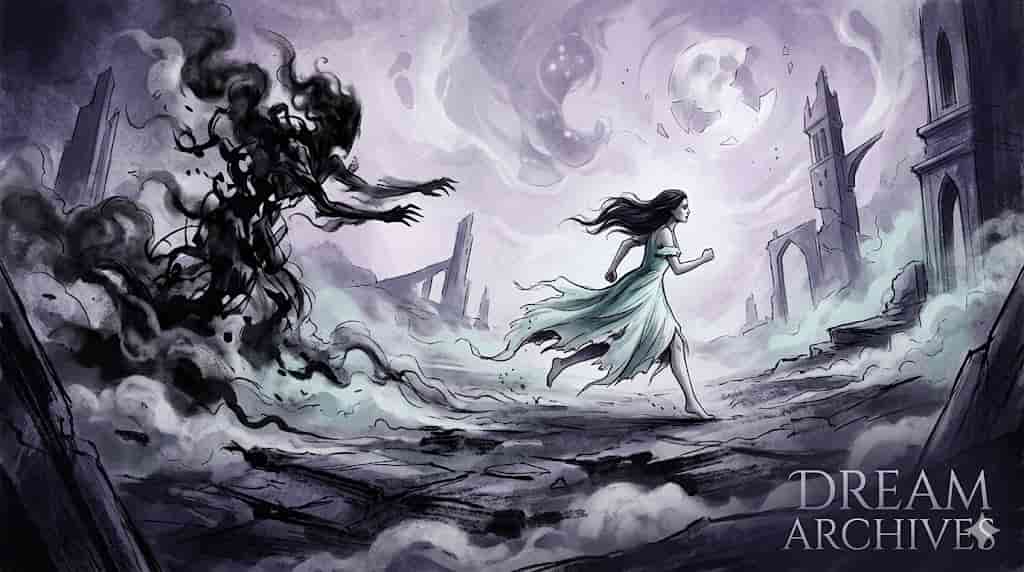
Being Chased: The Digital Pursuit - Screens, Glitches & The Algorithm

For centuries, we ran from wolves and demons. Today, we run from data, glitches, and the algorithm. This is an exploration of how the digital age has reshaped the architecture of our nightmares.
Introduction: The New Predator is Data
For centuries, humans dreamed of being chased by wolves, demons, or enemies with swords. Today, a new archetype has emerged in the collective unconscious. We are no longer just running through forests; we are running through server rooms, pixelated landscapes, and infinite scrolling feeds.
The pursuer has changed too. It's no longer a man with a knife. It's a faceless avatar, a swarm of drones, a sentient algorithm, or a glitch in reality that tears the world apart behind you. This shift reflects our deepest modern anxieties: loss of privacy, information overload, and the fear that our digital lives are controlling our physical ones.
Threat Source: Unknown Digital Entity.
Status: PURSUIT INITIATED.
Note: If you experience this dream frequently, consider a digital detox.
In this article, we dissect the anatomy of the "Digital Chase." Why does the brain visualize data as a monster? What does it mean when your own reflection in a screen starts chasing you? We will explore the psychological implications of these cyber-nightmares and offer strategies to "debug" your subconscious.
The Glitch Monster: When Reality Renders Poorly
One of the most distinct modern chased dreams involves visual distortion. As you run, the world behind you doesn't just stay dark; it corrupts. Textures fail to load. Buildings dissolve into wireframes. The sky turns into static noise. The chaser isn't a solid being but a flickering mass of pixels, jagged polygons, or a tear in the fabric of the dream itself.
Psychological Interpretation: This represents cognitive overload and dissociation. Your brain is trying to process too much information (from social media, news cycles, work emails), and it's "buffering." The glitch monster symbolizes the fear that your grasp on reality is fragile, that if you look too closely, everything falls apart.
- Tearing Textures: Feeling that your social mask is slipping or that your public persona is artificial.
- Low Frame Rate: Feeling slow and sluggish while the world moves too fast. A classic symptom of burnout in the information age.
- Blue Screen of Death: A total system crash in the dream often precedes a need for a complete mental reset or digital detox in waking life.
- Pixelated Blood: Even injury feels fake or digital, suggesting emotional numbness or desensitization to real-world violence seen online.
"The glitch is not an error; it is a message. Your mind is telling you that the simulation you are living—your curated online life—is becoming unsustainable."
Chased by the Algorithm: Surveillance Dreams
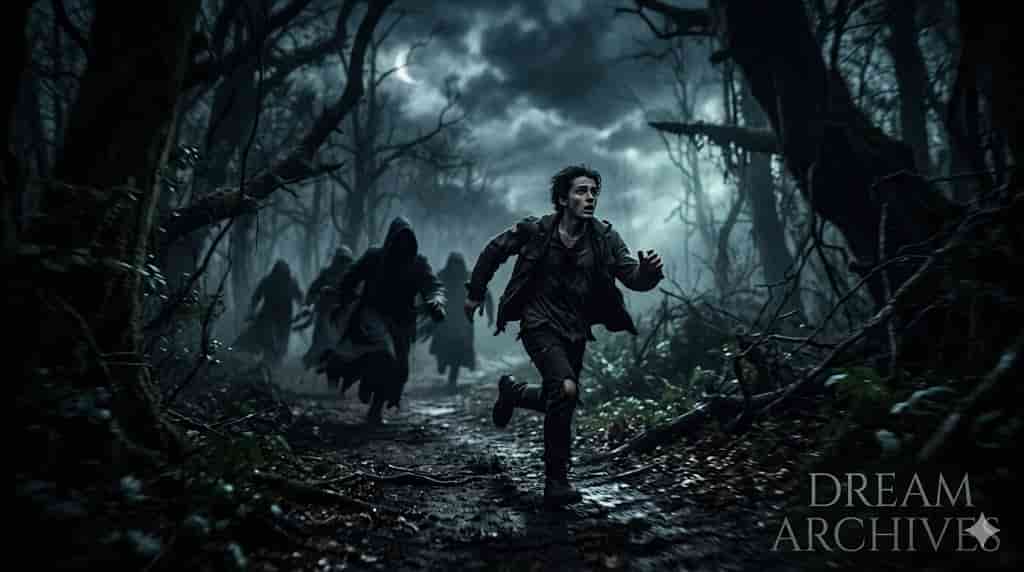
In these dreams, you aren't chased by a single entity, but by omnipresent awareness. Cameras follow you on every corner. Drones hover silently overhead. You hear notification dinging from everywhere at once. You try to hide in an alleyway, but a robotic voice announces your location: "User detected in Sector 7. Engagement imminent."
The Core Fear: This is the Panopticon Effect digitized. It reflects deep anxiety about privacy, data tracking, and the feeling of being constantly judged (likes, views, comments). The "chaser" is society's gaze, amplified by technology to be inescapable.
Common Scenario: You are trying to delete a post, a message, or a search history while being chased. But the "Delete" button doesn't work, or the message multiplies, spreading across walls and screens. This symbolizes the permanence of digital actions and the terror of "cancellation" or past mistakes coming back to haunt you.
The Screen Barrier: Typing but Not Moving
A uniquely frustrating variation: You are being chased, but you are frozen in front of a computer, tablet, or holding a phone. You are frantically typing, clicking, or swiping to "stop" the chaser or "log out," but your legs won't move. The chaser approaches slowly, inevitably, while you fight a digital battle that yields no results.
Meaning: This highlights the disembodiment of modern life. We try to solve physical, emotional problems with digital tools. You can't "email" your way out of a confrontation, "scroll" away from grief, or "tweet" a threat into submission. The dream is screaming a simple truth: Put the device down and run (act) in the real world.
The Infinite Scroll: Sometimes the floor beneath you turns into an endless feed. You keep scrolling down to find the bottom, but the chaser is rising from the content below. This represents getting lost in consumption and losing touch with grounded reality.
Avatar Death & Respawning Anxiety
Gamers and heavy VR users often experience chased dreams where they are aware they have "health bars" or "lives." Being caught doesn't mean death; it means respawning at the beginning. The horror isn't dying; it's the eternal loop of failure. You run, you get caught, you reset. Run, caught, reset.
Psychological Angle: This reflects the grind culture and the fear of stagnation. No matter how hard you work (run), if you fail once, you're back to zero. It's the fear of lack of progress, of being stuck in a cycle of trial and error without genuine growth or recognition.
The NPC Chaser: Sometimes the pursuer is a generic, repeating character (an NPC) with no soul, reciting the same line like "Stop right there" or "Identify yourself." This represents dehumanized interactions in the workplace, customer service burnout, or the feeling that your online arguments are with bots, not people.
Generational Differences in Digital Chases
The "flavor" of the digital chase varies significantly by age and digital native status:
- Gen Z / Alpha: Often chased by Social Entities. Swarms of faceless users, trending hashtags turning into physical chains, or influencers who grow giant-sized. The core fear is social exclusion, viral shame, and FOMO. The "chase" is often public and humiliating.
- Millennials: Chased by Work-Tech Hybrids. Emails that turn into snakes, Slack notifications that explode, laptops that sprout legs and chase them home. The core fear is the erosion of work-life boundaries and the inability to ever truly "clock out."
- Gen X / Boomers: Chased by Misinformation & Scams. Confusing interfaces, pop-ups that block the exit, robotic voices demanding credit card info, or "fake news" monsters distorting reality. The core fear is technological obsolescence, fraud, and losing control to a system they don't understand.
Case Files: Victims of the Virtual Chase
Case 1: The Drone Swarm
Dreamer: Jason, 26, Social Media Manager | Tag: SURVEILLANCE
The Dream: "I was running through a city, but the sky was blacked out by thousands of tiny camera drones. They weren't attacking me, just watching. Every time I tried to cover my face, a notification sound went off: 'Photo Uploaded.' I couldn't find a blind spot. The silence of the cameras was louder than screaming."
Waking Context: Jason was suffering from severe performance anxiety. He felt his entire worth was tied to metrics and visibility. He was checking analytics every 10 minutes.
Analysis: The drones were his own obsession with analytics externalized. The "Photo Uploaded" sound was his fear of being judged instantly.
Outcome: He took a 2-week sabbatical from all social platforms and deleted the apps from his phone. The dream stopped after 4 days of detox.
Case 2: The Rendering Error
Dreamer: Sarah, 31, Software Developer | Tag: GLITCH
The Dream: "A shadow was chasing me, but as it got closer, the world around it started to lose color. Then the ground turned into a grid. I looked at my hands and they were low-poly blocks. I realized I was inside a simulation that was crashing. The chaser wasn't killing me; it was deleting the world."
Waking Context: Sarah was working on a high-stakes project with tight deadlines. She was terrified of a bug taking down the production server.
Analysis: The "crashing world" mirrored her fear of system failure and the pressure of maintaining a perfect facade at work. The "low-poly hands" represented her feeling of becoming less human, more machine.
Outcome: She admitted to her team she was overwhelmed. Delegating tasks restored her sense of "high-resolution" reality.
Case 3: The Infinite Feed
Dreamer: Mike, 22, Student | Tag: ADDICTION
The Dream: "I was falling down a tunnel made of phone screens. Each screen showed a different video. I tried to grab the side to stop, but my hands slipped on the glass. A dark figure was rising from the bottom of the feed, getting closer with every scroll."
Waking Context: Mike was failing classes due to excessive TikTok/Reels usage, often staying up until 4 AM.
Analysis: The tunnel was the "doomscroll" trap. The figure rising from the bottom was the consequence of his lost time (failure, exhaustion).
Outcome: He installed strict app limiters and bought an alarm clock to keep the phone out of the bedroom. The falling sensation ceased.
Debugging the Dream: Coping Strategies
How to handle a digital chase when you realize you're dreaming (or even if you don't):
- Acknowledge the Medium: Say out loud in the dream: "This is a simulation" or "This is just code." Acknowledging the artificial nature often weakens the monster, turning it back into harmless data.
- Find the Power Button: Visualize a giant red button, a plug, or a breaker switch in the environment. Pulling it can shut down the chase sequence instantly, plunging the dream into a peaceful void.
- Change the Code: Instead of running, turn to the glitch and command it. Say, "Render me a shield" or "Turn the enemy into pixels." Use the logic of the dream against itself.
- Disconnect: Imagine ripping a cord out of your own spine or head. This symbolizes reclaiming your biological self from the digital noise. It often wakes you up peacefully.
- Close the Tab: Visualize a giant browser window encompassing the world. Find the "X" in the corner and close the tab. This signifies ending the session.
Frequently Asked Questions
I dreamed I was chased by an AI. Is this common?
Increasingly yes. As AI becomes part of daily life, our brains incorporate it into threat models. It usually represents fear of losing control to automation, being replaced in the workforce, or the unknown intentions of non-human intelligence.
Why do I hear notification sounds in my dreams?
This is often "sensory incorporation." Your phone actually buzzed, and your brain wove it into the story. However, if it happens often without a real sound, it indicates hyper-vigilance to digital cues—a sign you need to disconnect.
Can VR cause these dreams?
Yes, "VR Hangover" is real. Intense immersion can bleed into REM sleep, causing dreams where you try to use hand controllers to solve problems, feel phantom headset weight, or see UI elements in the real world.
What does it mean if my phone breaks in the dream?
If your phone breaks or dies while being chased, it can actually be a positive sign. It means your subconscious is forcing a disconnection, removing the barrier between you and your real emotions/actions.
Are digital dreams less 'real' than traditional ones?
No. The emotion is identical. The brain processes digital threats (social rejection, data loss) with the same intensity as physical threats (predators, falling). The symbolism is just updated for the modern era.
Still Running? Explore the Full Chase
From ancient labyrinths to modern algorithms, understand the full spectrum of fear:
Architecture of Fear: Mazes & Lost Places Digital Pursuit: Screens & The Algorithm